

The Mofflin Family in Darlington
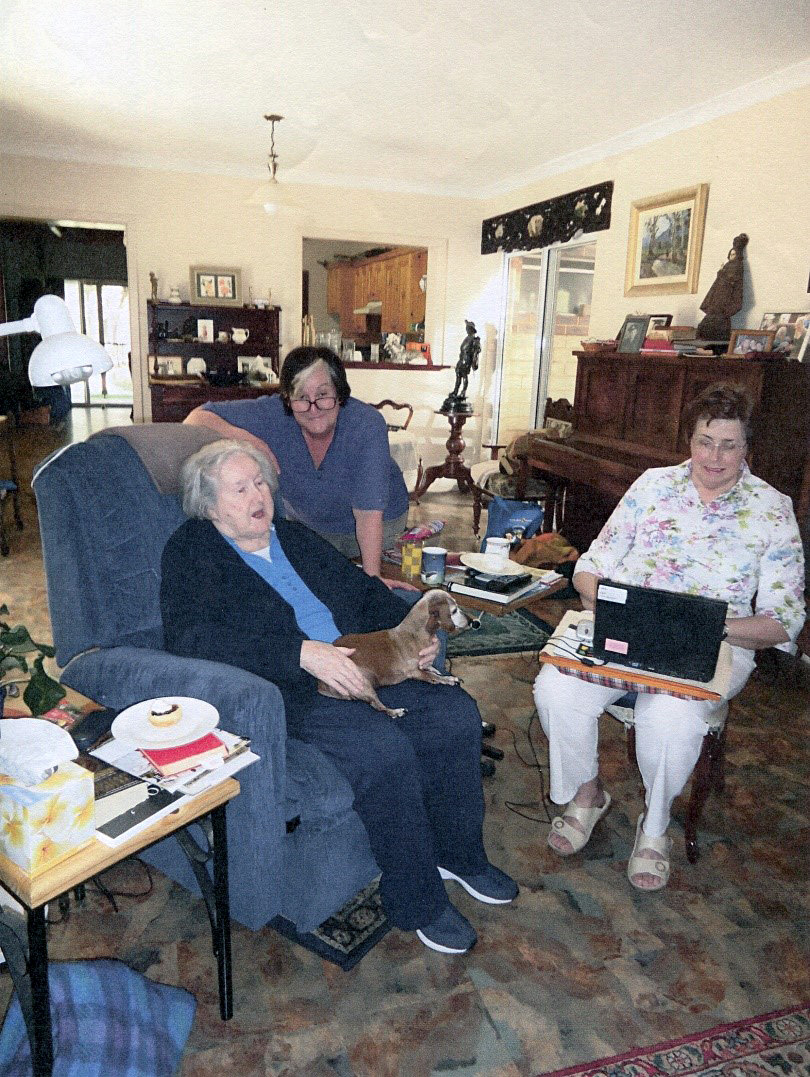
Typed by Margaret Little
Foreword
[In the interest of clarity some of this early history of the family would have only been orally passed down, with a resultant loss of detail. In this foreword I am including an accurate version that can be used to make sense of the following oral history by Jocelyn Mofflin (Clark).
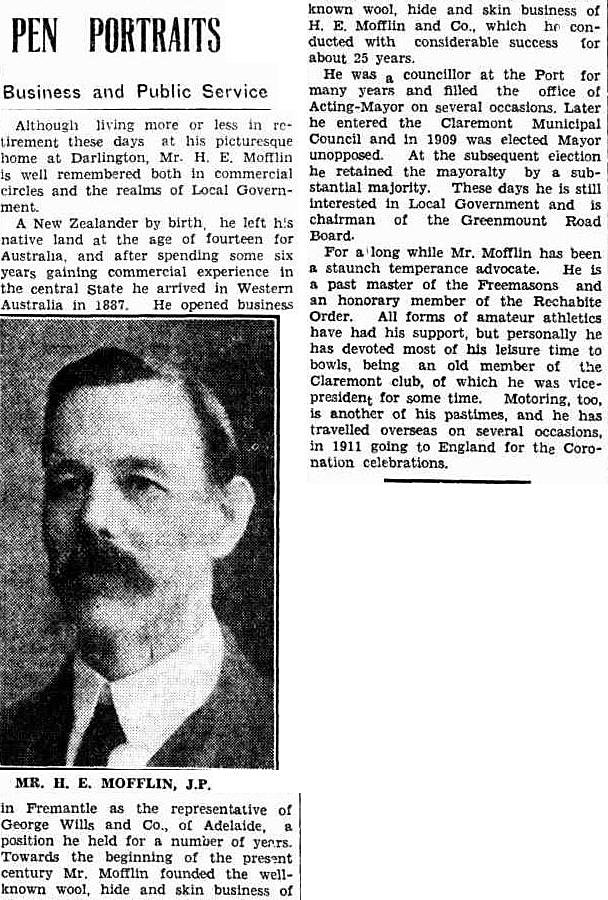
Horace Mofflin (not Edward) was born in 1840 at Maidstone, England and migrated first to Victoria, aged 17 in 1857. He later travelled to New Zealand where he married Margaret Sutherland in Auckland 1866. While in New Zealand the couple had 7 children, 4 sons and 3 daughters. A further son was born in 1888 in South Australia before the couple and their family arrived in WA.
Hence Horace Elgar Mofflin would have had 4 brothers, unfortunately two of them died serving in WW1 but the other two married and left descendants in WA. Both parents of Horace Elgar Mofflin died in WA. Margaret in 1911 and Horace in 1916. Margaret’s obituary said she had been in Fremantle about 20 years, making the families move from Adelaide to Perth around 1890.
Horace Elgar Mofflin married twice in Western Australia. Firstly, to Emma Ferres in 1891 and the couple had 4 children. Emma died after having the 4th child in 1904. Horace remarried Alice Burridge in 1906 and they had 8 children, the last one being Jocelyn in 1926. Their first son, Donald Mofflin, died as an infant at Darlington in 1922 and their second son, Herbert, died in a flying accident in WW2.]
NOTE: The DHG Archivist’s corrections and comments in the text body are in italics.
Jocelyn’s recollections start below of her Grandparents and Parents;
My father, Horace Elgar Mofflin, was born in 1867 in Hamilton NZ, and his father was Edward Elgar Mofflin, born 1840 in Maidstone, Kent, UK. Edward Elgar migrated to NZ from UK. Exact date unknown.
In 1881 my father, Horace, left New Zealand with his family. Aged 14, he was the oldest of the children. He had to look after his mother and siblings, as his father drank too much. My father related how he often had to rescue his father from difficult circumstances as a result of his heavy drinking. The family settled in Adelaide.
Horace was unable to enlist for the Great War, as he was caring for his family; they were all dependent on him. As far as I know, he was the only son. I think his sisters followed him to W.A. once he was settled. After school he started working for George Wills & Co, and at the age of 20, was transferred to W.A. as a representative for George Wills and worked in their Fremantle office, having learnt about this type of business in Adelaide. George Wills & Co. was both shipping and a merchandising agent, with branches in many states of Australia.
Several years later, my father decided to leave George Wills and set up his own company in Fremantle, as H.E. Mofflin & Co, also dealing with wool, skin and hides. 'Wilcox Mofflin' – also wool, skin and hide merchants – was the name of the company in both Sydney and Adelaide.
My father lost his first wife, Emma (nee Ferres) in January 1904, on the day she gave birth to their fourth child; Eily (Emma Eileen). At this time, my father was running his wool, skin and hide business in Fremantle. He was also a Councillor on the Municipal Council in Fremantle.
In 1906, my father moved to Claremont at the time of his marriage to my mother Alice (nee Burridge) and they lived for some years in Queenslea Drive. About 1917-18, my father started to build a new home overlooking the river at 6 Victoria Parade, Claremont.
During this time as Councillor on Claremont Council, he would have done some training in order to become a JP, and then a Magistrate. At some stage he also became a member of the Parole Board.
When my father and mother married, Alice had an immediate family by adopting the three older children from Horace’s first marriage (Horace Elgar, Nesta May and Dorothy Margaret). Horace & Emma’s fourth child, Ely (Emma Eileen) was raised by Emma’s sisters.
Minnie Ley
While the family lived in Claremont, my father employed Minnie Ley as a nanny, who remained with the family for many, many years. She was such a darling person and very talented. She was a large placid woman, who was always busy; she never stopped. She helped my mother in many ways in running the household. 1910 was the year my parents sailed to London to attend the coronation of King George V (Coronation was June 22 1911 and there were now 5 Mofflin children). As Horace was Mayor of Claremont at the time, I believe it was the reason he was invited to London. She was automatically delegated to look after the children; as they would have been away at least 7 - 8 months. My parents included a tour of Ireland, before they returned home and there is a photograph of them in Ireland both on horseback. While in UK they bought the grand-father clock. The clock was shipped out after they had returned home, but the ship was burnt and lost at sea on the way. My father wrote to the people in UK where they bought the clock, and asked them to send another. The clock is here with Flee (Jocelyn’s daughter Erin).
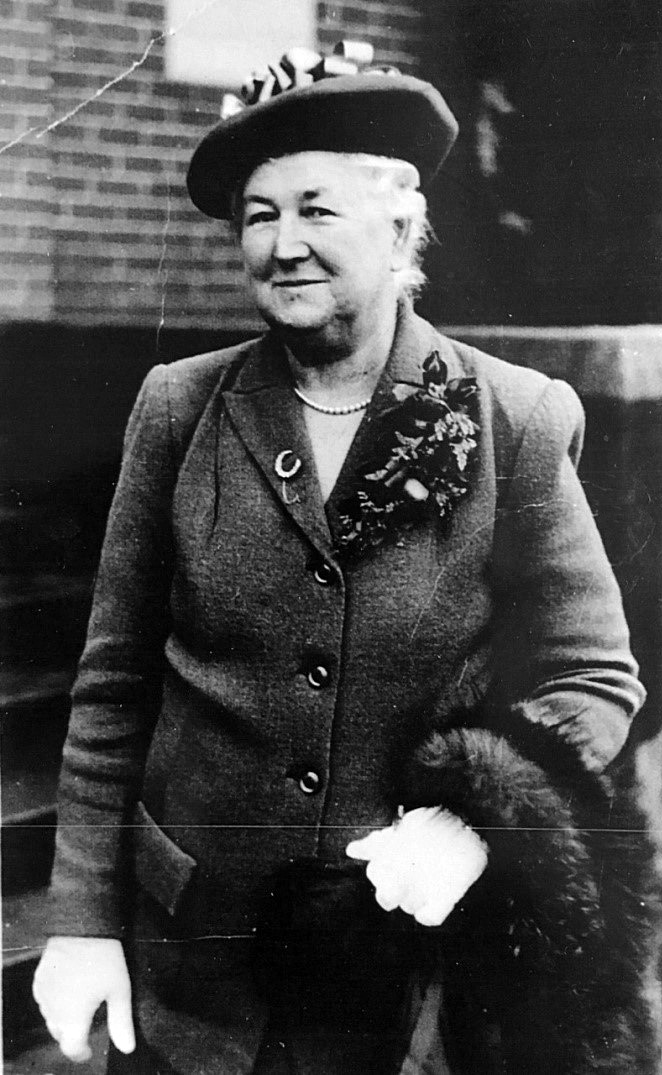
Minnie knitted the black stockings that I wore to school when I was about 5 or 6. She never had her hands empty; she was always sewing or knitting something. She used a set of circular needles to make me a dress, starting from the hem right up to the neck using very fine knitting wool in soft pale green with a fleck in it. It was so fortunate we had Minnie to look after the family, as Mum was a Lay Preacher and was always dashing off to visit someone or other. Mum spent her life’s work with the Methodist Church; she was regularly entertaining visitors to Perth who were connected with the church – including Daisy Bates who came to Perth from the desert. Minnie was just like a second mother; it was a relief for Dad to know that we were well looked after.
Father - A Frustrated Gardener
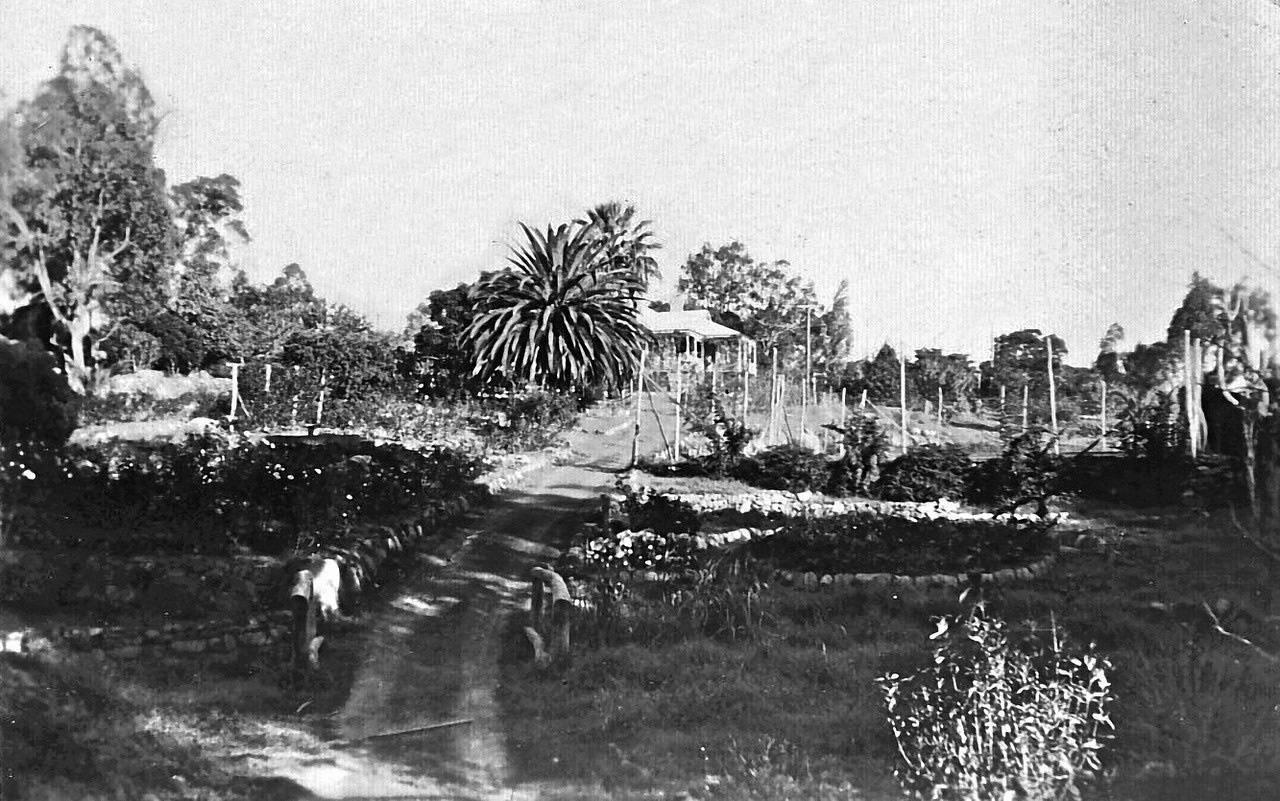
My father was also a frustrated gardener and longed to have a large rose garden. He found a ten acre property in Darlington with a house already set up on this land. My mother Alice was devastated about leaving her beautiful new home in Claremont, which had not long been completed. The property in Dalry Road was previously owned by Mr Johns (there is a sign in Dalry Rd in front of the house: “circa 1913”). Alice named the property “Blackwood” after the town in Victoria where she was born in 1878. Mrs Lavan (wife of lawyer, of Lavan and Walsh) bought the house at 6 Victoria Parade. She was living at 39 Lawley Cres, Mt Lawley and later sold 39 Lawley Cres, to Alice in 1939, while my father was in the Mount Hospital.
My father bought a ten acre block on Dalry Road, Darlington and the family (consisting of his 6 children with Alice and Dorothy from first wife Emma. Of the older two children: Horace had married in England in 1919 before returning to W.A., and Nesta was shortly to marry in 1923)) moved from Claremont about 1919 (actually 1922). Lionel Road was the boundary on the high side and Hillsden Road was at the back.
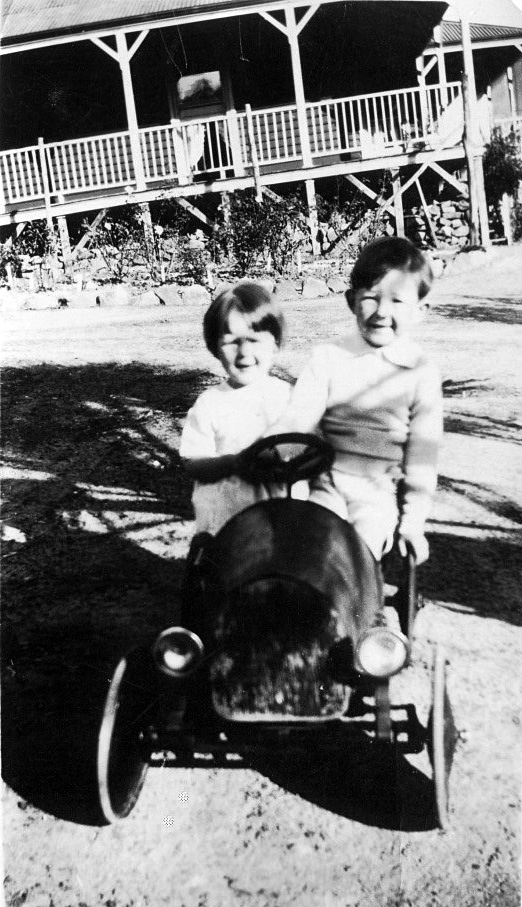
There was already a weatherboard house with a verandah all the way around on this land in Darlington, but it was very basic and set back from the road. The house had been built on the side of a hill, so there was room for a cellar under the house. Horace built a large trellis/pergola and planted numerous grape vines at the back and side of the house. (In 1920), Donald Elgar was born, but died aged 2 (in 1922); he was probably a cystic fibrosis baby.
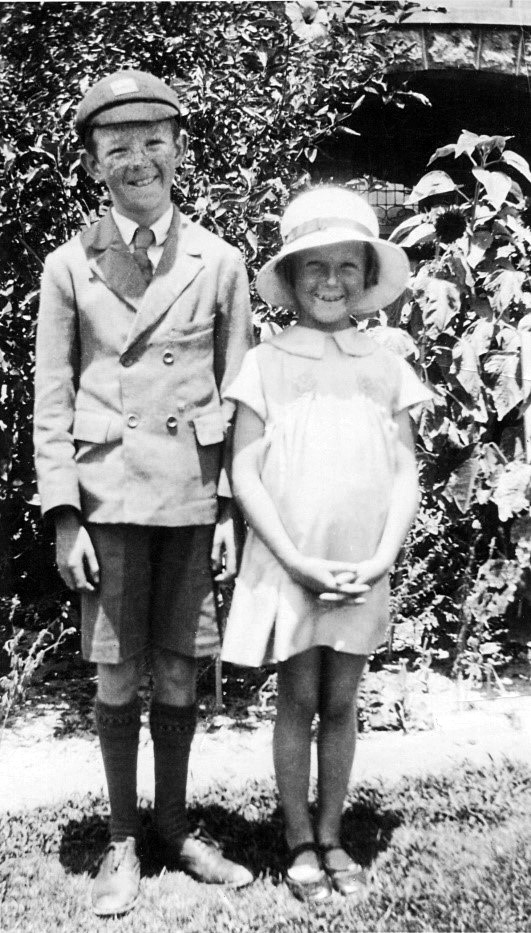
I was born on 13 July 1926 in a small hospital in Guildford, and was the youngest of 12 children. My mother took three of the four children from my father’s first marriage under her wing, and treated them all as her own. My brother Bill (Herbert Elgar) was born in 1924; we had a very happy childhood together.
My earliest childhood memory is of the many hours I spent in the native bush on our block where the wildflowers were in bloom, amongst many dead and fallen trees. A near neighbor Mr Turner (in the Garage House), was a “remittance man” and was trying to live on a pittance. I think that a “remittance man” was a person possibly sent from UK in disgrace (and a man living abroad on money sent from home especially in the days of the British Empire). He was a talented organist and built a pipe organ in his home. I would sit on the roadside to listen to him playing the organ. He started to cut up and remove the dead wood in 'my native bush', and I had to ask him to leave one fallen tree untouched for me to play on. So he invited me to choose which tree was most suitable, as I had fun playing 'horses' by rocking and 'riding' on the dead boughs. At some stage, my father sold the top half of his block, and I was sorry because I played on the large granite outcrops, which were then not on our property.
I always welcomed an opportunity to go to the cellar, which was partially made of stone and bricks; it gave me a chance to make a cubby house. Mum kept her eggs in the cellar. The eggs were soaking in a jelly-like liquid called isinglass, and I was usually given the job of gathering these. I had to put my hand in this slimy liquid to retrieve however many eggs my mother needed for her recipe.
My father also stored his flowers – especially the roses – in the cellar overnight, so that they were kept fresh before he had to deliver them to the Royal Show, or wherever they were destined.
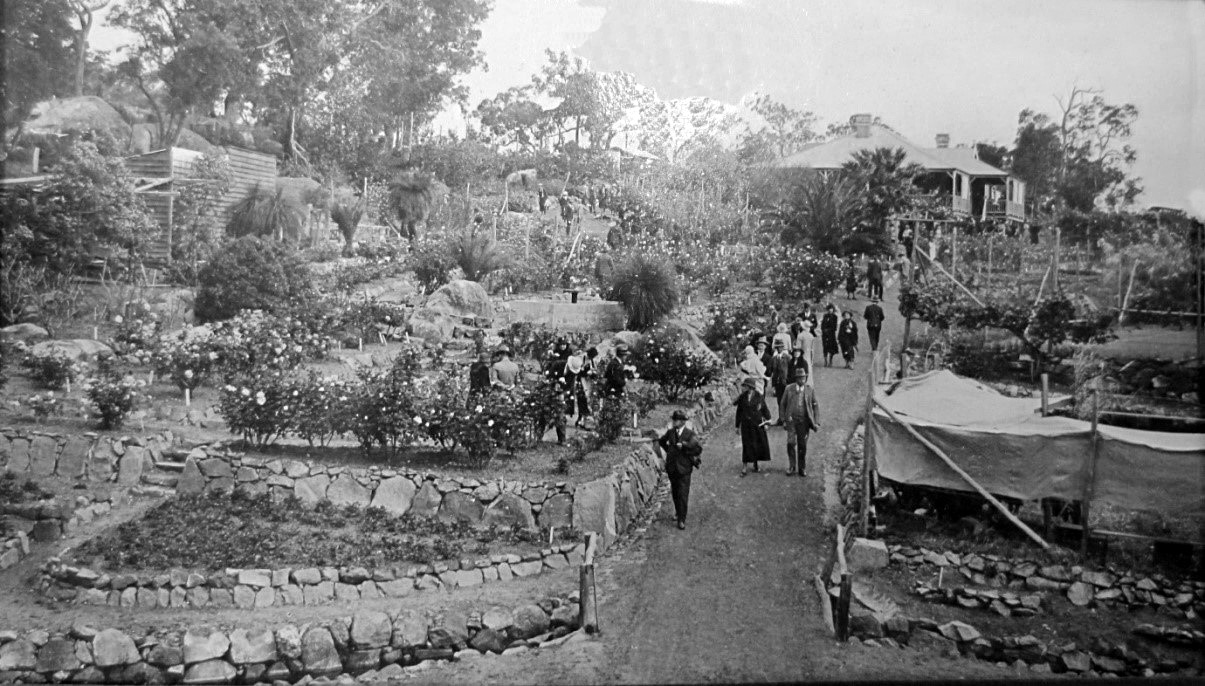
My father developed a magnificent garden with hundreds of rose bushes, an extensive orchard, vegetable garden, lawn tennis court, room for a chook yard and a cow paddock. The orchard was between the tennis court and the house. Beside the tennis court was a shade house, with a Schlumbergia creeper growing in it, which looked a picture when the pink flowers were in bloom. Inside the shade house, my father had built seats used during the tennis parties. He also built a small cottage –which was initially used for storage – in the cow paddock.
The Gardener’s Cottage
In later years, this cottage was used as accommodation for the gardener. One gardener my father employed was Mr Klaus (we called him Closey); he had been the leading violinist in the Berlin Symphony Orchestra. He lost his job because of his addiction to alcohol, and ended up in Fremantle Gaol. My father was on the Parole Board and offered him the job as our gardener. Closey would eat his tea in the kitchen each evening, and before retiring to bed he would bid me 'Good night, Josie dear'. I was very fond of Closey. He made me a little wooden chair, which I kept for my own children to use. I have a lovely photo of Penn sitting in the little chair and a table making mud pies (or something). As my father was a magistrate and a member of the Parole Board, he often carefully selected ex-criminals and offered them employment as our gardeners. As Darlington was reasonably isolated, my father felt that there was little opportunity for any further trouble. Closey would ask my mother if he could take one of my older siblings with him when he travelled to the city, so that he would not be tempted to enter any hotels en route. He often came home with large jars full of boiled lollies. Closey would make a fire in the cow paddock near his cottage, and set up kerosene tins around the fire for us to sit on. On the steps of the cottage he would set up his gramophone, and play a collection of beautiful records. I can remember listening to Amelita Galli-Curci – an Italian soprano – who became one of my favourites.
My Father
My father had a warehouse in Fremantle for his business as a wool, hide and skin merchant. There was a large brass plate on the outside labeled “H.E. Mofflin & Son”. When my eldest brother Horace (Brov) came back from World War I, he was a nervous wreck. Father felt that Horace (his eldest son) would take over his business, and, in the meantime, father would oversee the business until Horace learnt the job. My father planned to retire and bought the block in Darlington to develop a rose garden. Later on, Horace’s other son Bill (Herbert) was also invited to run the business, but he declined this offer. My father went down every week to oversee the business, and, initially, to help his son learn the ropes.
Eventually Brov (Horace Elgar) wanted to pass on Dad’s business to son Richard who, unfortunately, was not at all interested. So the business died. I pushed Richard to find out about retrieving the brass plate on the outside of the warehouse in Fremantle, engraved with “H.E. Mofflin & Son, Wool, Skin and Hide Merchants”. Richard retrieved this brass plate when the business closed; I had great difficulty in trying to rescue this plate from him after his retirement, but never succeeded.
In the warehouse, there was an awful smell of the uncleaned wool laden with lanolin, and my mother would never go in. I loved the smell, as the shelves were loaded with bales of wool, and there was always one open, in which I loved to hide myself. Mother took me straight home and put me in the bath, as she hated the smell of the wool.
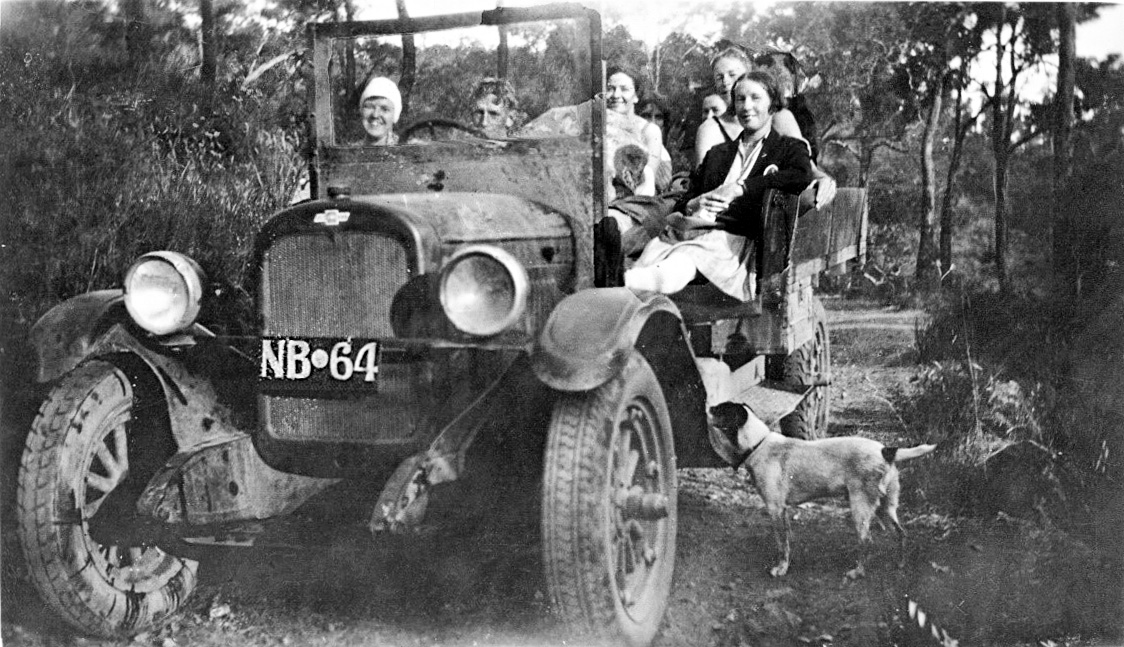
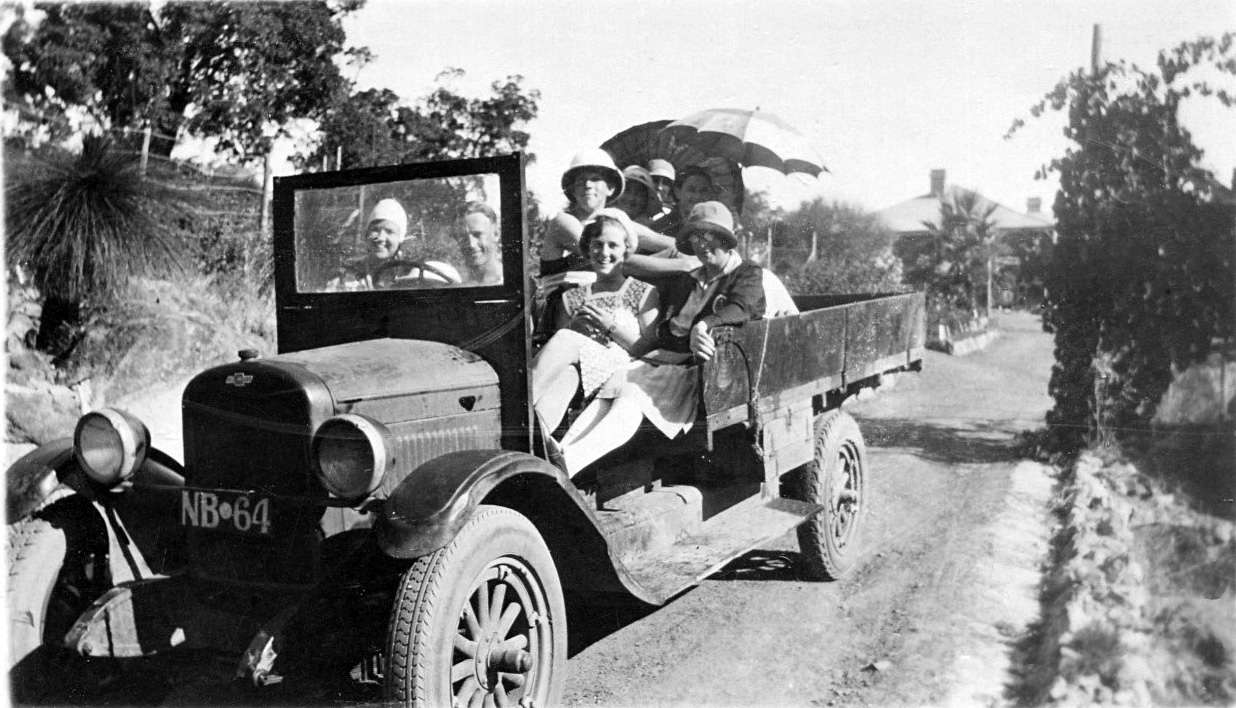
While at the Royal Show one year, my father came across some interesting cars and trucks. He decided to buy a Case car which was designed by Mr Case in USA, who designed & manufactured farm tractors. Mr Case had sent one car to the Perth Royal Show, which was exhibited amongst the Case tractors. My father bought the car there and then.
Dalry Road has some really tight curves, and several trucks had problems navigating this road. Once or twice, my father had to rescue a truck driver after a crash, and transport them to the nearest doctor in Midland. Using the Case car, the wounded man could stretch out and sometimes one of my sisters – both of whom were qualified nurses – would accompany them.
It is of interest to note that the manual for the Case car (with the inside cover endorsed “owned by H.E. Mofflin”) was found by a relative – Jack Madsen – at a Bring & Buy sale in the eastern States, but he did not buy this Manual at the time. My sister Bindi was furious with her husband Jack, because he did not bring this manual home with him.
Another time, at the Royal Show, my father bought one of the first electric Kelvinator refrigerators exhibited there. He arranged for it to be delivered to Darlington, without telling my mother. One day, my mother found this large white metal box arriving by truck, telling the driver that he had come to the wrong address. The driver assured my mother that if he had the wrong address, he would happily return to collect this item. When my father got home, he casually asked mother whether the refrigerator had been delivered. My mother was cross with him, for not telling her of its pending arrival. I was ecstatic because the refrigerator made ice-blocks, and every child from the Darlington school came up to our house to have an ice-block.
My mother was very capable in handling all situations, despite her protests.
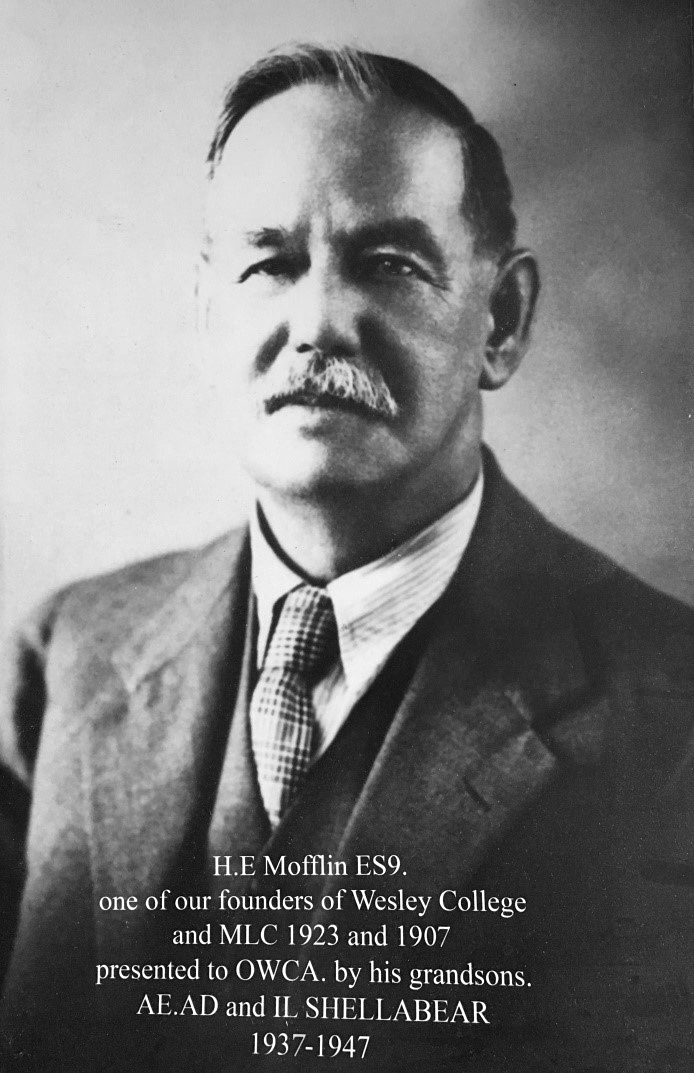
She needed to be calm because Horace was always surprising her with new things, like “We are going to England on Friday, dear”, giving her four days’ notice – despite the fact that they would be away for many months! Father said that everything would be all right as ‘Minnie can look after the children"! Dad always had a naughty twinkle in his eye. I can see it in a photo I have of him.
My father was an amazing man, with a stern face, but with eyes that twinkled. He was always on the lookout for any venture that would be profitable as well as a challenge. My father was a great man for a gamble. During the Depression, the wool left Fremantle for Britain, and because of the poverty in UK, it was left on the docks as money was short. My father bought up all this wool for a cheap price. It stayed there for some years, until he could make a profit by selling it for a higher price. My mother was always worrying about his tendency 'to gamble'.
My father always liked to 'shock' my mother, and she always had an answer and was able to cope with all that Horace presented her with. She called it 'her iron hand in a velvet glove', and said that it was the best way to deal with my father. She told all her daughters, that it was the best way to deal with their husbands!
Depression and Swaggies
The Depression was the era of the 'swaggies'. These were men who could not get work and often came to our house asking my mother for some work. She would always give them enough food to last till the next day. They always offered to repay her generosity by offering to do jobs around the house, chopping wood, etc. Many of them lived on rabbits, and would sell fresh rabbits to households, as it was a diet staple in those days.
We always had a gardener living in the cottage; usually they were parolees, whom my father employed. We often did not have many jobs for the swaggies to do, but my mother would try to find some small job for them, and still send them off with some food.
At one stage Dad bought the diving rights of a ship "SS Pericles”, which sank off Cape Leeuwin in 1910. My father was very keen to get into a diving suit to investigate this wreck – which was situated right where the Southern Ocean currents met the Indian Ocean currents – and there was a very short span on the calendar with good weather conditions, when diving would be safe. He did manage to dive once, but only retrieved some butter boxes from the wreck. In Mt Lawley in the 1940s, Alice was asked to sell the salvage rights by someone who wanted to dive and investigate this wreck. Alice gave him the salvage rights free-of-charge, saying “you’re very welcome”; she was glad to be rid of the responsibility.
The Darlington General Store was run by a Welshman, Mr Morrie Owen. I often helped myself to the open boxes of dried or fresh fruit he had stored under the counter. My mother soon found out about this, as Mr Owen would add these items to my mother’s store account.
Darlington Primary School
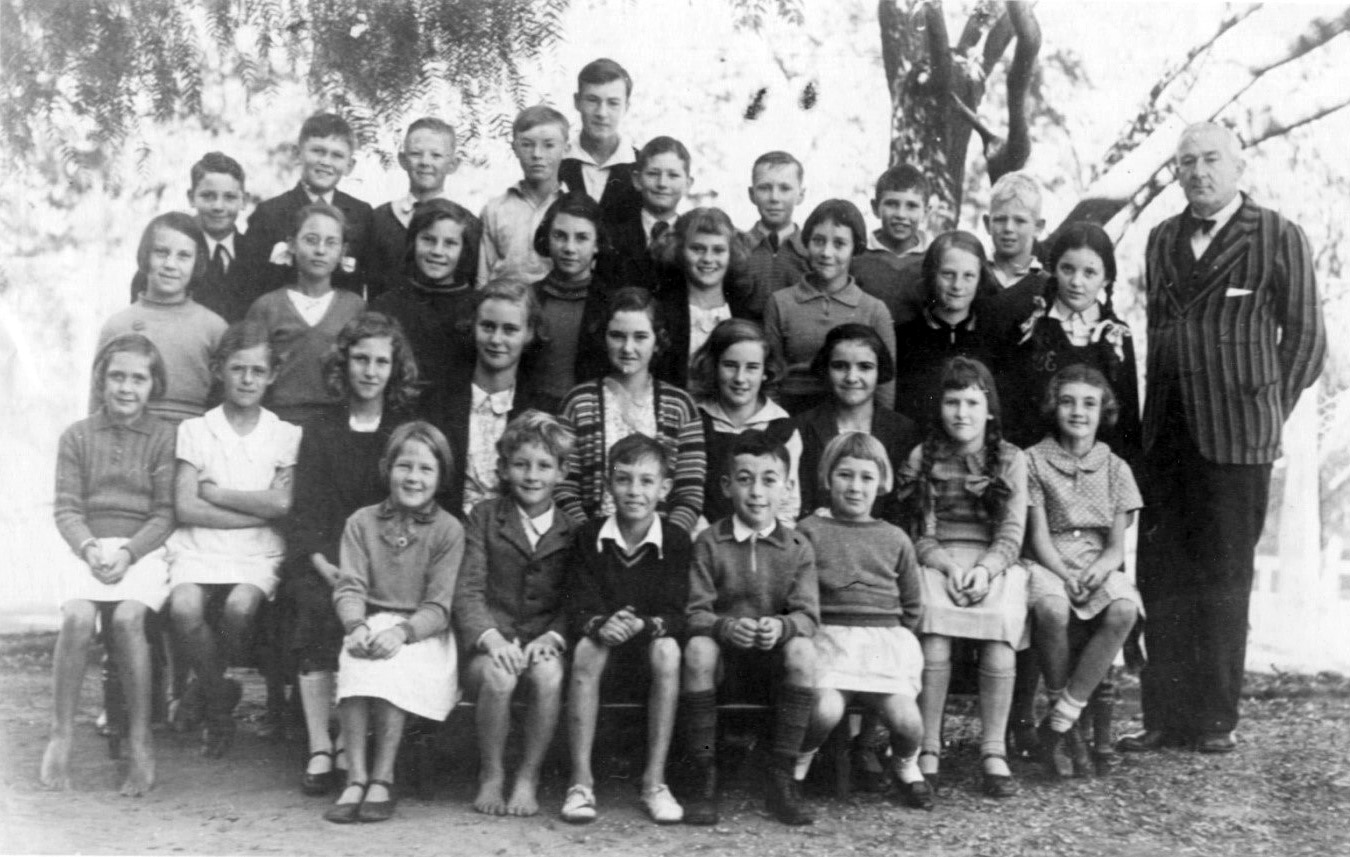
The Headmaster of the Darlington Primary School, where there were just two classrooms, was Mr. Humphrey. While he taught the older kids, Stella O’Keefe, a delightful teacher, taught the younger ones. Rob Ranger was told to learn a poem, but was caned on his hands because he was unable to finish reciting the verse. As an adult he became a wealthy businessman with good “hands-on” abilities!
The first primary school established in Darlington was at Leithdale House, and when they eventually had a total of 12 children, the government allocated money for the building of the Darlington Primary School. Stella O’Keefe (the O’Keefe family ran the Adelphi Hotel in the city) was the first teacher of kindergarten; Winifred (Win) Little took over when she left, and later married Peter Fischer. She was a keen horsewoman, which I was too young to appreciate at the time.
Open Garden at Dalry
Many bus-loads of people would come up from the city to see our garden, and my parents had tennis parties frequently on Saturdays. Mum often organized fêtes to raise funds for disadvantaged children overseas. Though no entry fee was charged, donations were encouraged. Lady Mitchell would come to officially open the fêtes, and her husband Sir James Mitchell (the Governor of WA at the time) would make a speech. Lady Mitchell would tug at her husband’s coat tail to stop him waffling, as he was inclined to do with his speeches.
When Sister Kate died, Alice and Horace Mofflin continued to support the children’s home at Parkerville. My sister Jane, a kindergarten teacher, worked at Sister Kate’s home in Parkerville when we were living in Darlington.
“Blackwood” The Mofflin Property at Darlington
My brother Bill and I often sampled mother’s cooking, as she made many lamingtons, brownie cakes and other delights for entertaining and unexpected visitors, of which there were many. Bill and I discovered that by removing a drawer in the kitchen cupboard, we could reach the goodies stored in the space below when mother was out of the house. Mother often commented on the missing cakes. She always made a delicious lemon drink for visitors and the tennis parties.
Many times Mother asked me to help her make the lamingtons, but I did not enjoy having to dunk the sponge squares in the chocolate icing and roll them in the coconut.
My parents had some very large and delightful paintings in the lounge room. Four in particular were large; one was a painting by my father’s sister Amy Mofflin of a cow drinking from a river. Another painting of a swagman lighting a camp fire to cook his meal was one of my favourites. Sadly I don’t know where that swagman painting ended up after Alice died and Mt Lawley was sold. Thankfully the four large paintings were given to my four older sisters, and some were also donated to the Perth Art Gallery.
Our neighbours, the Lowe family, lived opposite us; they had a pet sulphur-crested cockatoo called Alex, who was very good at mimicking the human voice. He was trained to tell the baker on his daily visit, which items the baker was to leave. Many times while I was playing in the native bush opposite, my mother would call “Joss, Joss ” for me to come home. I obediently rushed home to mother, to find that she had not called me. It turned out that Alex had learnt to mimic my mother’s voice, and it sounded so real.
I often walked down the footpath along the old railway line between Darlington and Glen Forrest. One day I found an area of fine white clay, and often took a supply home to make little cups and saucers. I dried these models in the bottom of mother’s oven, and used them to play with my dolls.
The Hort family
My father had a helper in the garden called Sam Hort, who lived in Greenmount. Sam was able to help in any way he could, and worked at many jobs, including road building in the area. He may have even worked with the team of men who built many stone houses in Darlington. Sam was called upon to help my father at busy times, such as pruning the hundreds of rose bushes. Sam had 16 children, having married twice; his first wife died after bearing him eight. One of the Hort children walked over the hill to our house each morning to collect a large billy of milk. The Hort family were Seventh-Day Adventists, and each Sunday morning the entire family would walk down to Bellevue to the only Seventh-Day Adventist church in the district, and virtually fill the church for the service.
My mother was always amazed at the degree of organisation in the Hort household. An older child was assigned to look after a younger child at all times; each child was also responsible for one tree in the orchard: the watering, the pruning and the picking of fruit.
Many years later when I was in Sydney I bumped into one of the Hort children who, at the time, was managing a hotel in Sydney. She gave me information about the other members of the family, all of whom were thriving. The hotel she was managing in the heart of Sydney was very successful, as she had a good background in organisation from her parents.
When I was a child, women had a difficult time organising meals, as their only means of keeping food fresh was the Coolgardie Safe. This “safe” was a metal box about one metre high and a metre wide, with metal mesh on each side to allow circulation of air, and on the top a tray about 10-12cm deep. This tray was filled with water daily and the flannel cloth hanging down the four sides outside the safe was constantly kept wet with one end in the water like a wick to keep the flannel wet. The Safe often sat on a frame so that the food was almost at bench level for easy access. Keeping meat cold was one of the main problems, but once meat was cooked it lasted an extra day or two.
Cows and Horses
My father bought a Jersey cow which produced beautiful creamy milk. On our back verandah was a separator where the milk was divided into cream and skim milk. One would pour the milk into a large container on the top of the separator and there were two outlets where cream came out one side and the skim milk out the other. A quantity of cream was always kept to make butter and the skim milk used for all the family. Butter was made in a churn – a large round wooden bowl – where the cream was beaten, as all the whey drained out, until it solidified, and it turned into butter.
I was a naughty girl in Darlington; Mum didn’t want me to have a pony, or to learn to ride. I would ride anything on four legs. Kelvin Prater let me ride with me sitting behind him hanging onto his belt. When the horse went into a gallop straight away I always slid off the back. When I was about seven or eight I went up to stay with the Kitto family (great family friends) on their farm at Cunderdin. I was able to ride one of their piebald horses, Bonney Boy, about 17 hands high (some 4’3”, or 167mm). The other horse called Rastus was a bad lad, too frisky, so I wasn’t allowed to ride him.
Tony Grills had a pony that I was desperate to buy. Dad would have allowed me to have this pony, but my mother was dead against my riding. She knew Emily Pellow – who had been a keen and successful horsewoman at the Royal Show – but had had an accident and become a paraplegic. So my mother was opposed to my learning to ride.
Some of our Neighbours
We got to know many of the families who lived in the neighbourhood. The Brennand’s lived on the block below us, next door down the hill, in Dalry Road; I often spent time with their daughter, Betty. I felt very envious as Betty had beautiful porcelain French dolls, each with a very real face. The arms and legs were jointed, and they had beautiful faces, bright blue eyes. Betty dressed them in different clothes and had a special pram to take the dolls out and about. On rare occasions I was allowed to touch and play with this doll, under Betty’s strict supervision.
John Owen, son of the General Store keeper, shared a passion for music, and often sang duets with my brother Bill, as they became great friends.
Up the top of Dalry Rd, on the left side, was a weatherboard house with a tin roof; it was supposedly haunted. The Fisher’s house at the top of Dalry Rd, the Rossiter's cottage on the corner and the haunted house, were the only buildings.
Some of The Dalry Rd residents were the Lowes, Milne Robinsons at the top, Judge and Mrs Draper, and the Brennand. On the corner of Darlington Road and Owen Road were the Pells.
The Lowes (Charles Thomas a Business Manager who purchased the Hotchin house at 36 Dalry Rd) came later (1936/37) when Bill and I were older; we played with Tony Lowe and June Lowe (the family with Alex the parrot). We were about 12 at the time.
We had a family of nudists living in Dalry Rd, and they often lay out in the sun. They were very discreet with screens around them when out in their garden, and were a very respectable family, but did not stay long in Dalry Road.
I often took persimmons down to Mrs Draper, one of her favourite fruits, with compliments from my father – much to mother’s disgust.
The guest house in Dalry Road (Dalry lodge) was possibly set up after 1939, as I don’t remember one before the family left.
Pat Pell lived down on the corner of Owen and Darlington Roads (near the Pines Store).
Eileen and Joan Bovell lived in the vineyard, on the other side of the railway. Eileen married Gordon Freeth, who became the headmaster of Guildford Grammar School.
Tom (the elder) and Pat Hardwick also lived on the vineyard. Pat was a good friend of my older sisters.
Mofflins and Music
All children were encouraged to enter the annual Eisteddfod. Sometimes they were held in the Glen Forrest Hall, sometimes at Darlington or Mundaring. I usually had to recite verses, such as “Four and Twenty Ponies”. My brother Bill and his friend John Owen often sang duets.
My dad was a great organ player. Every night after dinner, we would set ourselves up in the music room. My Dad played an organ – which I always loved to hear. We had a beautiful organ at Darlington, but years later I was very sad to find that my Dad was donating it to the Methodist Church in Gnowangerup as they had no piano or organ to accompany their hymns. His comment was, “They needed it more than we did.”
One of my favourites was listening to him play “Traumerei”. My mother played the piano; Jane (Jean) played the piano and the cello, Gwen played the fiddle and so did Dallas. Marion played the viola and Margaret played the fiddle; Bill also played the piano beautifully – he was taught at Wesley College. Everybody sang while they played their instruments. When Bill was at school, he took part in many plays; he often played the part of the female and Ric Throssell played the part of the hero.
The Railway
The Hills train was very accommodating, and well patronised by many families in the hills suburbs. The driver would stop at the vineyard in Darlington, so all those who lived nearby were picked up and did not have to walk to Darlington Station. There was only one train each morning to take all the workers to the city, and all the children to their schools. Starting at Chidlow, and picking up passengers at Mundaring and Glen Forrest, the train stopped only at Guildford Grammar, and again at Mt Lawley for all the Perth College students. The driver always seemed to know which people caught the train from which station, and if they were running late, he would wait for them. Bill would often blow his bugle on arrival at Darlington Station, and Mother could hear this, so she knew he was on his way home.
During the wet weather on the outbound journey up the hills the train often had difficulty maintaining progress, as the wheels would slip and the train would roll backwards. Sand was put onto the track to help the wheels get some traction to get up the hill and when the train stopped at the Greenmount Station, just east of Scott Street, they also waited for anyone running to catch the train.
Father’s Death and Leaving Darlington
In 1939 my father had a stroke from high blood pressure, and was cared for by Dr Hislop in the Mount Hospital, at the top of St George’s Terrace. Fortunately my sister Marion (a trained nurse) was at home at the time, after father told her he “had a bad headache”. She immediately recognised the urgency of the matter, and ordered an ambulance. He was in hospital for a short time before he died.
The year I finished primary school (c1939), while my father was in hospital, my mother took a big step in deciding to buy a house in Lawley Crescent, Mt Lawley. In the past, my mother had never done anything major without consulting my father.
At this time, I started at Methodist Ladies College in Claremont. I was not very happy about this as I had so much travelling by tram into the city, then trolley-bus from the St George’s Terrace out to Claremont.
The Darlington property was not sold for some years after my father’s death and Jock was asked to continue to live in the cottage to tend the house and garden in our absence.(The house was rented possibly by someone with the surname Stone, until 1942 when the Steele family purchased the property).
Our Dog Jippy’s Adventure
When we moved to Mt Lawley, we took our dog Jippy. He was given to us as a puppy by Bill Sunnix, who was one of my father’s wool classers, and regarded as the best wool classer in Australia. A number of firms tried to poach him to work for them, but he would not leave my father. He was supposedly a purebred Fox Terrier. We kept him on the floor of the car, so he could not see where we were heading.
When we arrived at Mt Lawley, Jippy stayed only 2 days then disappeared. We looked everywhere for him but failed to find him. We thought he must have been killed on the road somewhere.
Three months later, Jock rang us to tell us that Jippy had arrived in Darlington. The only problem with him was that he had very sore foot pads, otherwise he was in one piece. We decided he obviously wanted to stay with Jock in Darlington.
EARLY DARLINGTON FAMILIES
VICTOR
My sister Marrie (Marion) was a good friend of Mardie Victor; I had met the other Victor girls, Dorothy and Estelle, but I only remember Mardie, as she was such a bright girl.
VINCENT
This family lived on Darlington Rd, right on the corner of Dalry Rd, directly opposite the Rev. Alexander Crowe. I remember 'Polly' (Wallace), a sweet lad, who had tickets on my sister Binnie (the biggest flirt, with red-gold hair). He had a ramshackle ute and we all went with him down to the Helena River to swim with the leeches. The Vincents, Huelins and Mofflins all had tennis courts, and the weekly tennis parties rotated around each court (taking turns to use one another’s courts). My Mother always did a lot of cooking for her tennis days. I was always roped in to help with the lamingtons and I got the job of dunking the cake in the chocolate sauce.
HUELIN
Fred and Edith lived at the top of Montrose Avenue, which did not connect with Dalry Rd, but there was a walking track with steps leading down to the bitumen of Montrose. The family lived below us, on the side of the hill. Edith Huelin rescued me when I fell over on the path leading down to the store, school, and railway line – about 200 - 300 yards down the hill from our house; she took me inside and bandaged my leg. Fred was the Administrator of RPH.
LETCH
Joss remembers when Joy Letch, aged 5- 8, living in Montrose Ave on the top- right-hand side in the white house with verandah around (up near the steps), fell off this verandah. It was quite a big drop into a “shell-shaped” ornament with sharp objects around the edge. Joy lost one eye, eventually got a serious infection and died in hospital. Joss played with her older sister, called Barbara.
Mrs Letch was a thin lanky, miserable, negative person, but Barbara was a lovely person and a great friend. We had many hours of fun playing Phantoms, with ideas taken from the Phantom comics.
HORT
This family lived at the top end of Darlington Rd near the highway, off Oxley Rd. Sam worked for the Shire; for extra money he worked in Horace’s garden – especially to help to prune all the roses. It was a lovely family: 16 children from two marriages. His first wife died, but bore him (8) children.
OXLEY
(Mary & Josephine) lived very close to Sam Hort in Oxley Rd (Sam was their Uncle). James, the father, died (1925) leaving mother and daughters. This happened while I was at Darlington School. Joss remembers the overwhelming sadness in the family, but at that time did not know what caused the sadness.
DRYSDALE
They lived on the hill near Leithdale, but I don’t know much about them.
OTHER RECOLLECTIONS OF PEOPLE FROM DARLINGTON
Mrs Ambler would collect thousands of used envelopes and make money by selling the stamps at our Annual Fête. Many groups of women’s auxiliaries set up their stalls to help in their fund-raising for various church groups.
Mrs Campbell, “Cambo”, a Scot was a small lady who came up to Darlington and lived with us for three months each year; she spent this time making clothes for all the family. She could sew, knit and crochet, and enjoyed our musical evenings after dinner. She would recite poetry and I remember a verse or two from those days.
Phyllis Bennett, a classmate of Pat Hancock’s, was a scallywag at Perth College. While a nun was writing a lesson on the blackboard, Phyllis tied the nun’s cord and tassel to the back of the chair. When Sister Suzanna tried to turn around to face the class, she could not move. She was red with rage, but the class could not contain themselves and burst out laughing.
Mrs Phyllis Browning Ashton came once a week to teach Jill and Flee the piano in Greenmount, and later in Swan View. A problem was that when it rained, Mrs Ashton had to sit at the piano with her umbrella up and her gloves on, a hot-water -bottle on her lap and a rug around her knees. I was constantly running back and forth to empty all the containers I had placed in the room to collect the rain dripping through the ceiling.
THE END